Description
PEARL MILLET – Kambam, Kambu, Bajra, Sajje, Sajjalu, Bajri
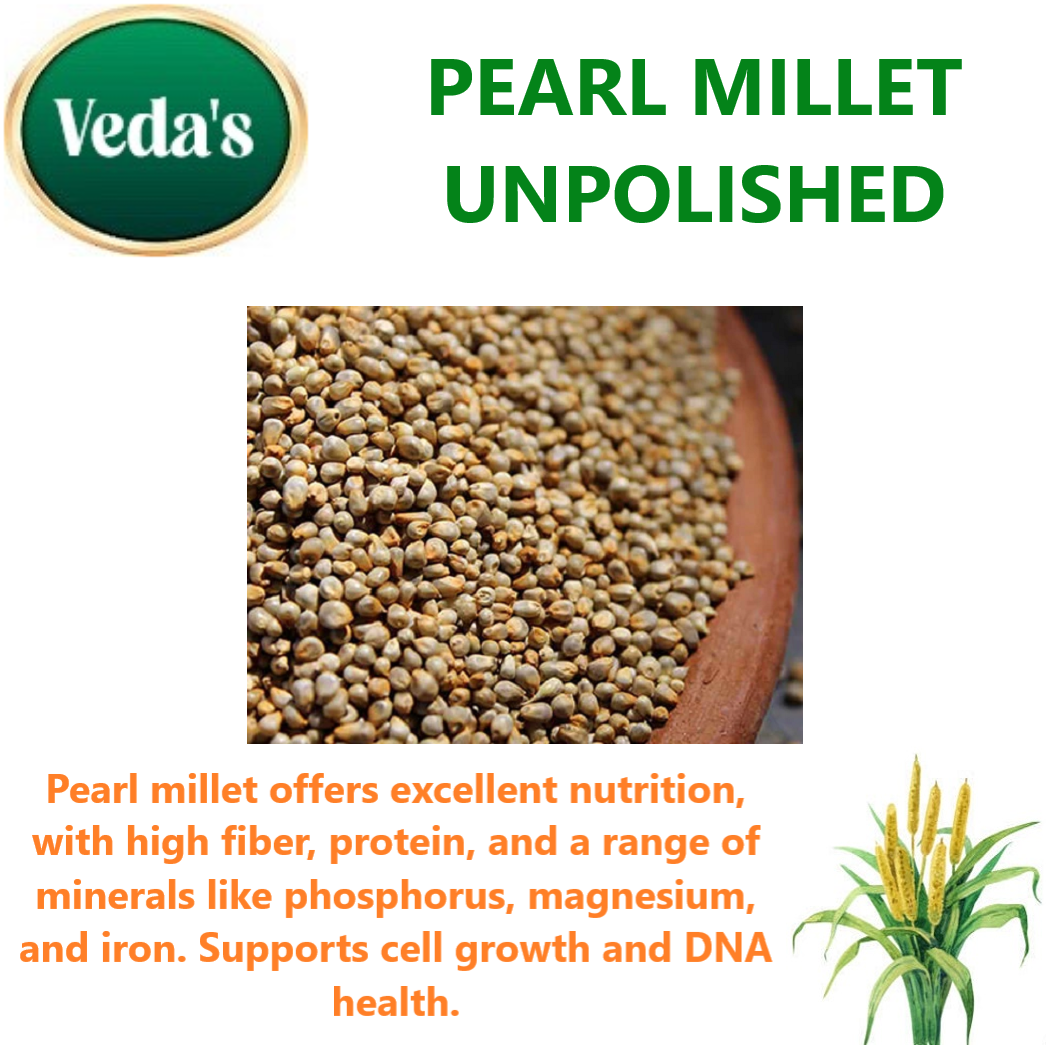
Pearl Millet is a gluten-free grain packed with fiber, protein, iron, magnesium, and antioxidants, offering benefits like improved digestion, blood sugar control (due to low GI), heart health support, weight management (feeling full longer), and sustained energy, making it great for diabetics, gluten-intolerant individuals, and active lifestyles, but it’s best in moderation as part of a balanced diet.
Nutrition Facts (per 100g, approximate)
Calories: ~378 kcal
Carbohydrates: ~72g
Fiber: ~8-11g
Protein: ~11g
Fat: ~5g
Minerals: Rich in Iron, Magnesium, Phosphorus, Potassium, Zinc.
Vitamins: Contains Thiamine, Riboflavin, Niacin, Folate, B6, Vitamin E.
Health Benefits
Digestive Health: High fiber content adds bulk, promotes regularity, and feeds gut bacteria.
Blood Sugar Control: Low Glycemic Index (GI) releases sugar slowly, ideal for diabetes management.
Heart Health: Magnesium and fiber support blood pressure and cholesterol levels, reducing heart disease risk.
Weight Management: Fiber keeps you full, reducing snacking.
Energy: Complex carbs provide sustained energy.
Gluten-Free: Safe for celiac disease and gluten sensitivity.
Antioxidants: Contains beneficial plant compounds (polyphenols, lignans) that fight inflammation and may have anti-cancer properties.
Allergens: Millets are generally Allergen-Friendly (Except for Specific Grain Issues) and Gluten-Free and millet allergies are rare. Protein Allergies: Millets contain proteins. If you have a known allergy to a specific type of grain or protein (e.g., certain types of seeds/grains), you should be cautious.
How to use
Soak the millet 8-12 hours for optimal cooking and digestion.
Grains: Cooked as a porridge, upma, or poha.
Flour: Milled into flour to make flatbreads such as rotis, bhakris, or dosa.
Processed foods: Used in snacks, biscuits, pasta, and breakfast cereals.
Other uses: Can be processed into fermented products and is also used to prepare beer.
Considerations/Caution
Mineral Absorption: Polyphenols in millet can slightly hinder iron/zinc absorption, so enjoy it with vitamin C-rich foods.
Moderation: Include as part of a varied, balanced diet for best results.
Reviews
There are no reviews yet.