
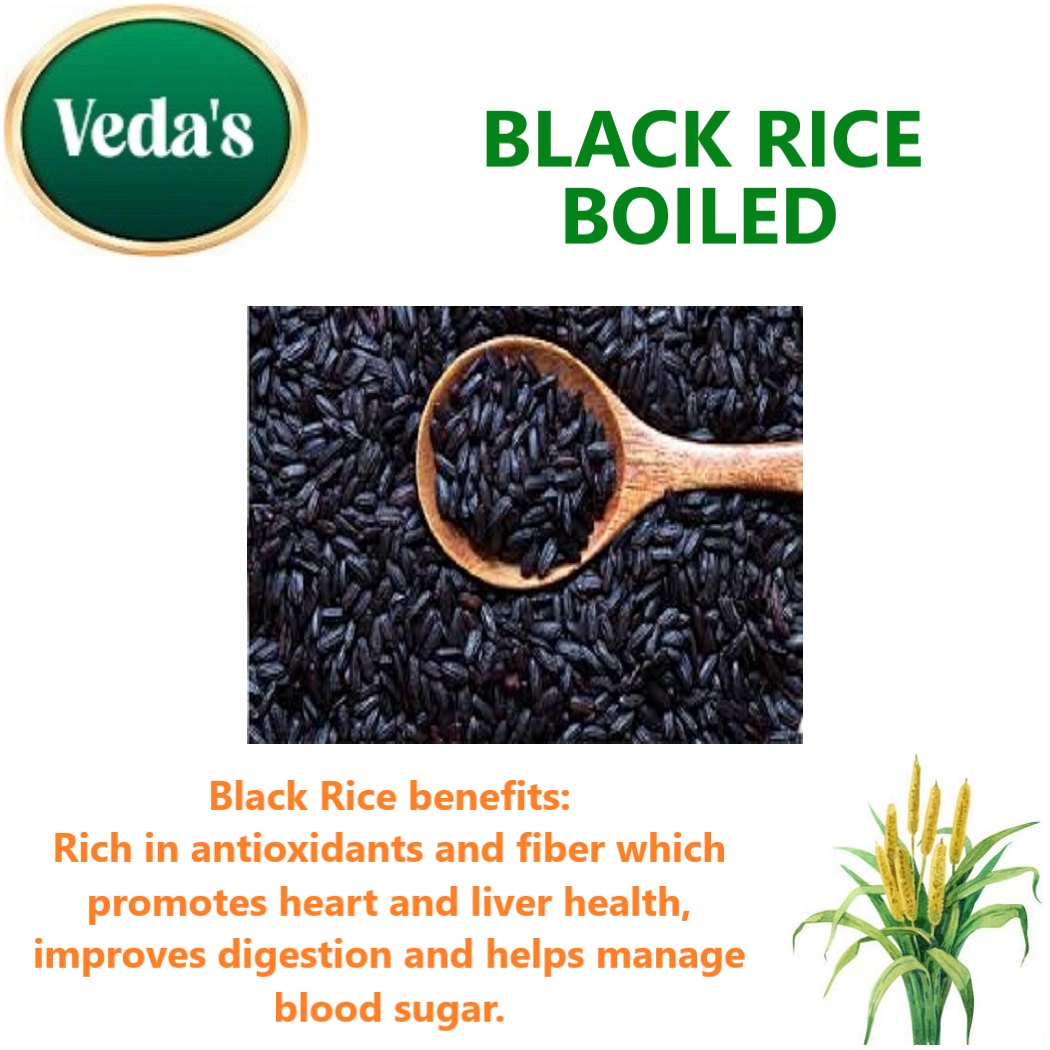
Description
BLACK RICE – Njavara, Karuppu Kavuni, Purple Rice, Forbidden Rice
Black rice is a highly nutritious, whole-grain rice prized for its rich antioxidant content and nutty flavor. Forbidden Rice: This is its most common alternative name, originating from ancient China where it was once reserved exclusively for the Emperor and royalty to ensure their health and longevity. Purple Rice: The cooked grains often appear deep purple. Njavara: A name used in Ayurveda in India.
Health Benefits
Rich in Antioxidants: Black rice is especially high in anthocyanins, the pigments that give it its deep purple-black color (also found in blueberries and eggplants). These powerful antioxidants help fight oxidative stress, reduce inflammation, and protect against free radical damage, which lowers the risk of chronic diseases like heart disease and cancer.
Heart Health: Its high fiber and antioxidant content can help lower “bad” (LDL) cholesterol levels and manage blood pressure, supporting overall cardiovascular health.
Digestive Health: High in dietary fiber, it promotes regular bowel movements, aids digestion, and prevents constipation.
Weight Management: The fiber and protein content promote a feeling of fullness, which helps control appetite and can assist in weight loss efforts.
Diabetes Management: Black rice has a low glycemic index (around 42-45), meaning it causes a slower, steadier rise in blood sugar levels compared to white rice, making it a suitable option for people managing diabetes.
Other Benefits: It also supports eye health (containing lutein and zeaxanthin), boosts immunity, and promotes healthy skin and hair due to its nutrient profile.
Nutrition Facts (per 100g cooked) (Approximate)
Calories: ~130-160 kcal
Protein: ~2.6-4.5 g
Fat: ~0.4-2.4 g
Carbohydrates: ~25-38 g
Fiber: ~1-3 g
Iron: ~1.1-1.8 mg
Other: Contains Vitamin E, calcium, potassium, zinc, and various amino acids.
Allergens: Black rice itself isn’t a common allergen, but allergies to rice (especially bran) or related grains like oats/barley can occur, causing typical allergy symptoms like rashes or swelling.
How to Use
Soak the millet 8-12 hours for optimal cooking and digestion
Cooking: A common cooking ratio is 1 cup of rice to 2-3 cups of water, simmered for 30 minutes, followed by resting off the heat for 10 minutes.
Culinary Uses: Side Dish/Main Course: Serve it as a healthier alternative to white or brown rice with curries, stir-fries, or roasted vegetables.
Salads & Bowls: Its striking color and texture make it an excellent base for vibrant grain bowls and cold salads.
Desserts: It is often used in sweet applications in Asia, such as black rice pudding made with coconut milk.
Other: It can also be incorporated into bread, noodles, or even fermented into beverages.
Considerations/Caution
Digestive Discomfort: Due to its high fiber content, introducing black rice too quickly or consuming it in excessive amounts may cause gas, bloating, or abdominal discomfort in some people.
Arsenic Content: Like all rice varieties, black rice can contain trace amounts of arsenic, a naturally occurring toxin. Rinsing the rice thoroughly before cooking and using a higher water-to-rice ratio (and discarding excess water) can help mitigate this risk.
Pregnancy: If you are pregnant or have chronic digestive issues, consult with a doctor or nutritionist before making it a regular part of your diet.
Reviews
There are no reviews yet.