
Description
BROWNTOP MILLET – Kavadapullu, Kula Saamai, Pedda Sama, Korale, Hari Kangni, Sanva
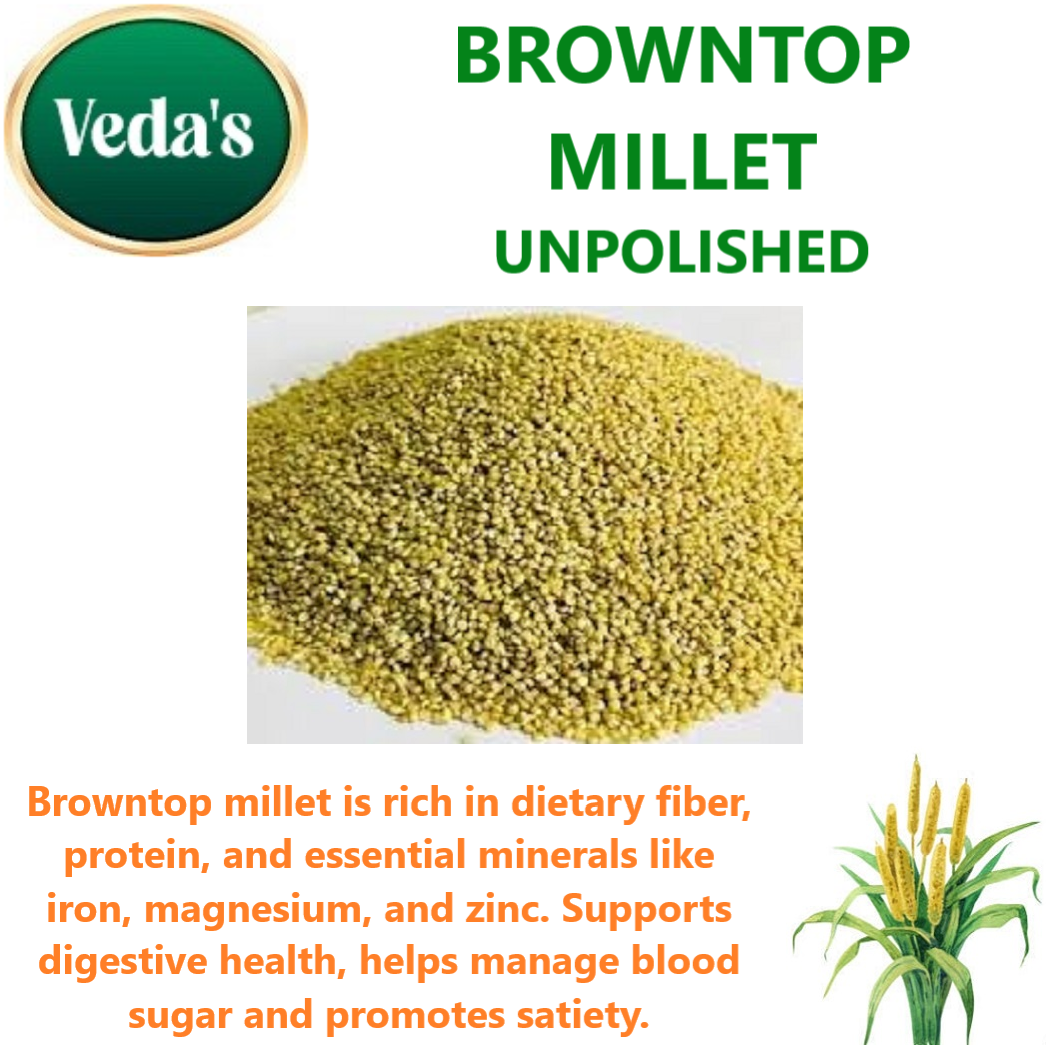
Browntop millet is a highly nutritious, gluten-free ancient grain known for its numerous health benefits, including supporting digestion and managing blood sugar. It is versatile and can be used in a variety of dishes as a healthy alternative to rice or wheat.
Health Benefits
Promotes Digestive Health: Rich in dietary fiber (both soluble and insoluble), it acts as a prebiotic, supports healthy gut bacteria, regulates bowel movements, and can help alleviate constipation.
Manages Blood Sugar and Weight: It has a low glycemic index and high fiber content, which promotes slow glucose absorption and keeps you feeling full for longer, aiding in diabetes management and weight loss efforts.
Augments Cardiac Health: The protein, fiber, and magnesium content helps lower bad (LDL) cholesterol, manage blood pressure, and improve overall heart function.
Strengthens Bones: It is a good source of calcium, phosphorus, and magnesium, essential minerals that contribute to strong bones and help prevent conditions like osteoporosis.
Provides Essential Nutrients: It is a treasure trove of essential nutrients, including B vitamins, iron, and antioxidants, which boost the immune system and support overall well-being.
Nutrition Facts (per 100g) (can vary slightly)
Energy ~338 kcal
Carbohydrates ~71 g
Protein ~8-11.5 g
Fat ~1.9-4.9 g
Dietary Fiber ~9-12.5 g
Calcium ~28 mg
Iron ~7-8.8 mg
Phosphorus ~276 mg
Potassium ~60-188 mg
Allergens: Millets are generally Allergen-Friendly (Except for Specific Grain Issues) and Gluten-Free and millet allergies are rare. Protein Allergies: Millets contain proteins. If you have a known allergy to a specific type of grain or protein (e.g., certain types of seeds/grains), you should be cautious.
How to Use
Soak the millet 8-12 hours for optimal cooking and digestion.
As a rice substitute: Cook it like rice (a general ratio is 1 part millet to 2 parts water) and serve with curries or dal.
Porridge: Cook it with water or milk for a healthy breakfast, adding fruits, nuts, or honey.
Salads and Pilafs: Cook and chill the millet, then toss it into salads or prepare savory pilafs with vegetables and spices.
Baked Goods: Use the flour as a gluten-free alternative in recipes for breads, muffins, dosas, or pancakes.
Soups and Stews: Add cooked millet to thicken soups and stews and add texture.
Considerations/Caution
While generally safe for most people, moderation is key, especially for certain individuals:
Thyroid Conditions: Millets contain goitrogens, which can interfere with thyroid function if consumed in excessive amounts. Individuals with thyroid issues should consume them in moderation.
Kidney Stones: Due to their oxalate content, people prone to kidney stones should limit high consumption of millets.
Infants: The high fiber content can be tough on developing digestive systems, so millets should be introduced to infants carefully and in small amounts.
Reviews
There are no reviews yet.