Description
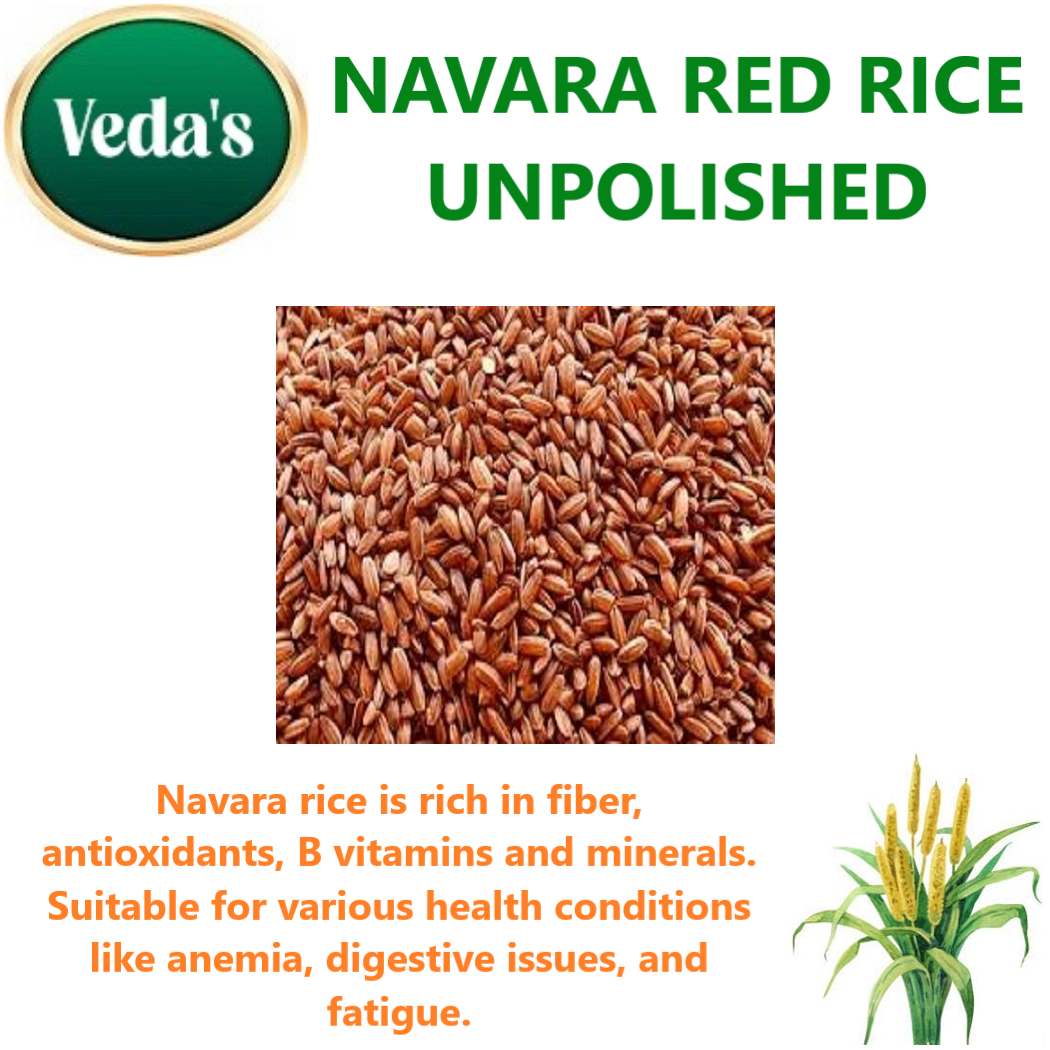
NAVARA RED RICE – Njavara Rice, Red Rice, Shshtika
Navara red rice is a traditional Indian “medicinal rice” known for its rich nutritional profile, including high iron, fiber, and antioxidants, and its use in Ayurvedic treatments. It is easily digestible and suitable for people of all ages.
Health Benefits
Rich in Antioxidants: Contains high levels of anthocyanins and polyphenols, which help protect the body from oxidative stress and inflammation.
Aids Digestion: Its high fiber content supports healthy digestion, promotes regular bowel movements, and can help with issues like constipation, bloating, and IBS.
Manages Blood Sugar: It has a low glycemic index, which aids in the slow and steady release of glucose, making it a suitable choice for individuals with diabetes.
Boosts Immunity & Energy: Packed with essential nutrients, complex carbohydrates, and iron, it supports a strong immune system and provides sustained energy.
Supports Bone & Joint Health: Traditionally valued for its calcium and magnesium content, contributing to strong bones and mobility.
Beneficial During Recovery/Pregnancy: It is traditionally given to those recovering from illness, the elderly, infants (as a weaning food), and pregnant or lactating women to build strength and vitality.
Promotes Heart Health: Helps lower “bad” (LDL) cholesterol levels due to its fiber and beneficial plant compounds.
Nutrition Facts (per 100g serving) (approximate)
Energy: ~351-360 Kcal
Carbohydrates: ~71-73 g
Protein: ~9-9.5 g
Fat: ~2-3 g
Dietary Fiber: ~3-5 g
Iron: ~0.88-3.5 mg
Magnesium: ~45 mg
Zinc: ~14.85 mg
Vitamin B6: ~1.97 mg
Allergens: Navara Red Rice is generally Allergen-Friendly (Except for Specific Grain Issues) and Gluten-Free and Navara red rice allergies are rare. Protein Allergies: Navara Red Rice contains proteins. If you have a known allergy to a specific type of grain or protein (e.g., certain types of seeds/grains), you should be cautious.
How to Use
Soak the millet 8-12 hours for optimal cooking and digestion.
Porridge/Kanji: A thin gruel or porridge (known as kanji) cooked with water, milk, and sometimes medicinal herbs, is a traditional and easily digestible meal, especially for the sick or recovering.
Everyday Meals: It can be used as a healthier alternative to regular white rice for daily consumption, accompanying curries and other dishes.
Other Dishes: It can be incorporated into dishes like idlis, dosas, upma, or even healthy desserts (payasam).
Ayurvedic Therapies: In Kerala, it is a key component in the Navarakizhi treatment, where the rice is cooked and used in a medicated poultice for body massages to address neuromuscular and rheumatic disorders.
Considerations/Caution
Moderation is Key: As with any food, it should be consumed in moderation as part of a balanced diet.
Arsenic Content: Like all rice, it can accumulate inorganic arsenic from the soil. Rinsing thoroughly before cooking and using a high water-to-rice ratio (and draining the excess water) can help reduce exposure.
Medical Advice: Individuals with specific health conditions (e.g., kidney disease, on diabetic medication) or who are pregnant/breastfeeding should consult a healthcare professional before making significant dietary changes.
Reviews
There are no reviews yet.